🤖 Pal Robotics: Your Guide to the Future of Robotics
Intro

Welcome to Pal Robotics! Your Portal to the World of Consumer Robotics

Are you fascinated by the robots you see in movies and science fiction, wondering when they will step out of the screen and into your life? The future is no longer a distant dream—it's here, and it's happening faster than you might think. At Pal Robotics, we are your dedicated resource for everything related to the rapidly evolving world of consumer robotics.

Our goal is simple: to inform, educate, and excite the public about the incredible advances being made in robotics, with a special focus on the technologies and automatons that will soon be available to you, the everyday consumer.

↕️ Show/Hide Full Article

What We Cover: From Concepts to Countertops

Here is what you can expect from Pal Robotics:

  • 📰 Breaking News & Reveals: We track the biggest announcements from major tech companies and innovative startups. Be the first to know about the next generation of smart home companions, personal assistants, and specialized robots designed to simplify your daily life.
  • 🛠️ Deep Dives into Consumer Tech: What makes a new robot tick? We provide in-depth, accessible analyses of the underlying technologies—from advanced AI and machine learning to sophisticated sensors and next-level battery life. We break down the jargon so you understand the "how" behind the innovation.
  • 🛒 "Soon to be Available" Spotlights: Our most exciting feature! We keep a close eye on the transition from lab prototype to commercial product. We highlight robots that are entering pre-order, moving into mass production, or hitting store shelves within the next 12-18 months. If you can soon buy it, we'll tell you everything about it.
  • ⚖️ Ethical & Practical Discussions: The rise of consumer robots brings up important questions about privacy, safety, and societal impact. We host thoughtful discussions and expert interviews to explore the ethical challenges and practical implications of integrating robots into our homes and communities.
  • 🤖 Reviews and Comparisons: Once a consumer robot is available, we put it to the test. Our unbiased reviews and head-to-head comparisons will help you determine which robot is the right fit for your needs and budget.

The Robotics Revolution is Personal

Robotics is no longer confined to the factory floor. It is entering our homes, helping with chores, providing companionship, assisting the elderly, and teaching the next generation. The development of consumer-friendly robots—from advanced robotic vacuums and lawnmowers to sophisticated humanoids and personal drones—marks a pivotal shift in how we live, work, and play.

We believe that an informed public is a prepared public. By staying current with Pal Robotics, you won't just witness the future; you'll be ready to embrace it.

Join the Pal Robotics Community!

Follow us on our journey to explore the future, one robot at a time. Subscribe to our newsletter, engage with us on social media, and never miss an update on the technology that will transform your life.

Let’s step into the future, together!
Tesla's Optimus: The Humanoid Robot That Could Reshape Our World
Optimus

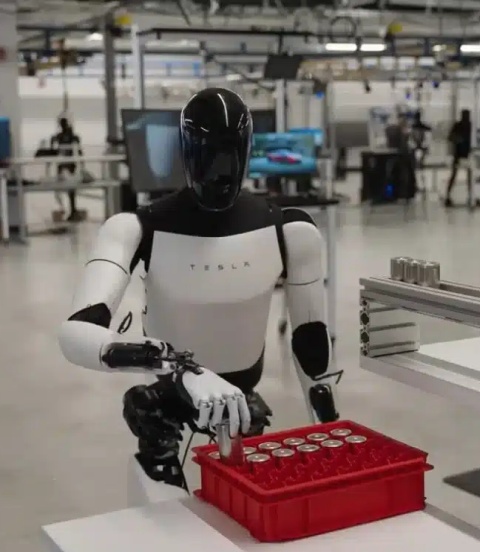
For decades, the idea of a general-purpose humanoid robot seamlessly integrating into our daily lives felt like a distant dream, confined to the pages of science fiction. But with Tesla's Optimus project, that future is rapidly becoming a tangible reality. Optimus isn't just another robot; it's a potential game-changer poised to revolutionize multiple industries and fundamentally transform home life as we know it.

The Vision: A General-Purpose Humanoid

The core philosophy behind Optimus is its humanoid form. While specialized industrial robots excel at one task, Optimus is designed to operate in an environment built for humans. Because it has a body structure similar to ours—bipedal locomotion, articulated hands, and the ability to interact with tools and objects designed for human use—it theoretically eliminates the need to redesign factories, homes, or infrastructure for its deployment.

This is powered by advanced AI. Optimus leverages the deep learning and neural network architecture initially developed for Tesla's Full Self-Driving (FSD) in its vehicles. Essentially, the robot is trained to perceive the world through vision (using cameras), understand context, and plan its movements in real-time. With every task it performs and every unit deployed, the entire "fleet" learns, constantly improving its skills and autonomy.

↕️ Show/Hide Full Article

Revolutionizing Industry: The End of "Dangerous, Repetitive, and Boring" Tasks

The immediate and most significant impact of Optimus is anticipated to be in the industrial sector. Tesla's primary goal is to use Optimus to perform the jobs that are often described as dangerous, repetitive, or boring (DRB).

  • Manufacturing and Logistics: Optimus prototypes have already demonstrated abilities like sorting colored blocks, lifting and moving objects, and performing precision tasks. In Tesla's own factories, these robots could eventually handle component assembly, quality checks, and material handling, especially in cramped or ergonomically challenging areas. This could help address chronic labor shortages and significantly increase efficiency and production scale.
  • Construction and Mining: In dangerous environments, such as contaminated zones, extreme temperatures, or hazardous mine shafts, Optimus could replace human workers, minimizing risk and casualty. Its ability to navigate uneven terrain and adapt to unstructured environments is crucial here.
  • Retail and Service: Imagine robots stocking shelves, organizing storerooms, or assisting with basic customer service tasks in large retail or warehousing facilities. This frees up human employees to focus on more complex tasks, customer engagement, and problem-solving.

Transforming Home Life: A Personal Companion and Assistant

While the initial rollout is focused on industry (Tesla has ambitious plans to use them in their own factories first), the long-term vision is to bring Optimus into every home. Elon Musk has suggested that the price point could eventually be under $30,000—less than many vehicles—making it theoretically accessible to the average consumer.

In the home, Optimus has the potential to become the ultimate personal assistant and companion:

  • Domestic Chores: Tasks like doing laundry, cleaning the kitchen, organizing storage, and even basic repairs could be delegated to Optimus.
  • Elder Care and Assistance: Perhaps the most profound application is in providing care for the elderly or people with disabilities. An Optimus could offer full-time, in-home assistance, helping with mobility, preparing meals, and providing monitoring, offering a higher quality of life and independence.
  • Companionship and Education: As AI sophistication grows, Optimus could serve as an interactive companion, engaging in conversation, teaching skills, or even simply providing passive companionship.

The Road Ahead: Challenges and Timeline

While the potential is enormous, the journey to mass-market, general-purpose humanoids is still fraught with technical and practical challenges:

  1. AI Complexity: Moving from demonstrating simple, repetitive tasks to complex, nuanced decision-making in unpredictable, unstructured environments (like a human home) requires a massive leap in its "Embodied AI" capabilities.
  2. Cost and Scale: Ramping up production to millions of units while maintaining quality and driving the price down to consumer levels is an an unprecedented manufacturing challenge, even for a company known for vertical integration like Tesla.
  3. Safety and Ethics: Integrating a powerful, autonomous machine into public and private spaces requires rigorous safety testing and clear ethical guidelines to ensure it operates reliably and harmlessly around humans.

Despite these hurdles, the pace of development is undeniable. With the Gen 2 prototype already demonstrating faster walking, reduced weight, and incredibly dexterous hands (capable of handling something as delicate as an egg), the technology is advancing rapidly. Tesla has suggested internal use in their own factories could begin as early as 2025, with potential external customer deliveries beginning around late 2026.

Optimus represents a bold bet on the future. If Tesla succeeds in achieving large-scale production of a truly general-purpose, affordable humanoid robot, it could unlock a new era of productivity and dramatically redefine the concept of human labor, both in the factory and in the home. It is a development that Pal Robotics will be following every step of the way.

🐕‍🦺 Beyond the Hype: The Real-World Impact of Boston Dynamics Robots
Boston Dynamics

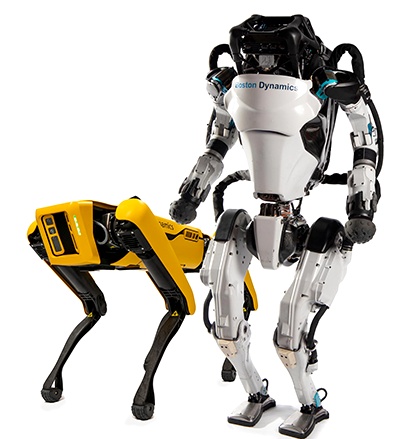
When most people think of Boston Dynamics, they picture the viral videos: a bipedal robot executing perfect parkour or a four-legged machine dancing to music. While these demonstrations are astonishing feats of engineering, the true story of Boston Dynamics is one of pioneering dynamic, highly mobile, and commercially deployed robots that are tackling the world's most challenging industrial environments.

Unlike concepts geared toward the distant consumer home, Boston Dynamics robots are already working for hundreds of customers across logistics, construction, utilities, and more. Here is a look at the advanced robots making the biggest impact today and the technologies that define them.

↕️ Show/Hide Full Article

The Current Fleet: From Quadruped to Logistics Workhorse

Boston Dynamics currently focuses its commercial efforts on two key robots, with their research humanoid moving rapidly toward commercialization:

1. Spot: The Agile Inspection Robot

  • Design: A sleek, electric-powered, four-legged (quadruped) robot often described as a "robot dog." Its design is optimized for navigating environments built for humans but inaccessible to traditional wheeled or tracked robots.
  • Core Capabilities:
    • Unparalleled Mobility: Spot can traverse stairs, rough terrain, industrial grating, and cluttered construction sites. Its dynamic balancing allows it to recover from pushes and falls.
    • Autonomous Data Capture: Equipped with cameras, thermal sensors, and a powerful compute payload (often including the optional robotic arm), Spot autonomously performs inspection routes. It monitors equipment for faults, captures 3D scans of sites, and checks for leaks or anomalies in dangerous industrial settings, keeping human workers safe.
  • Real-World Use: Used globally in oil rigs, nuclear power plants, manufacturing facilities, and construction sites for remote monitoring and data collection. It is currently available for commercial and industrial purchase, but is not intended for consumer use.

2. Stretch: The Warehouse Automation Specialist

  • Design: A highly-mobile, wheeled platform with a single, incredibly powerful robotic arm designed specifically for heavy lifting and bulk material handling.
  • Core Capabilities:
    • High-Speed Case Handling: Stretch is purpose-built for the repetitive, back-breaking work of unloading trailers and building pallets in distribution centers. It can handle up to 800 cases per hour.
    • Flexible Deployment: Unlike fixed automation systems, Stretch is mobile. It can be easily rolled into a standard truck bay or placed anywhere cases need to be moved, requiring minimal changes to existing warehouse infrastructure.
  • Real-World Use: Currently being deployed in massive logistics and warehousing operations to automate trailer unloading—a dull, dirty, and dangerous task—speeding up inbound operations.

3. Atlas: The Research Pioneer (Transitioning to Commercial)

  • Design: The world's most dynamic humanoid robot, originally a research platform known for its ability to perform advanced gymnastics, parkour, and dynamic balance maneuvers.
  • The New Era: The original hydraulic version of Atlas was retired, making way for a new, all-electric Atlas explicitly designed for real-world commercial applications. This marks a significant shift from pure R&D to targeting complex manipulation tasks in industrial settings, beginning with Boston Dynamics' parent company, Hyundai.
  • Significance: Atlas continues to push the boundaries of whole-body control and Embodied AI, paving the way for the next generation of general-purpose robots capable of operating safely in human workspaces.

The Technology That Makes the Difference

What sets Boston Dynamics apart is their decades-long focus on dynamic stability and real-world mobility—the ability to react, adapt, and move like a living being in unpredictable environments. This foundation is built on:

  • Whole-Body Control: Sophisticated algorithms that coordinate the entire body (legs, torso, and arms) to maintain balance and achieve complex movements.
  • Advanced Sensing: A combination of vision, LiDAR, and force-sensing systems allows the robots to perceive the environment in 3D and react to physical contact or changes in terrain instantly.
  • Fleet Management Software (Orbit): To manage and scale these industrial robots, Boston Dynamics provides software that allows customers to remotely control, monitor, and manage autonomous missions for an entire fleet of robots from a centralized platform.

Boston Dynamics’ robots are not science fair projects; they are rugged, sophisticated tools that are driving tangible productivity gains in industries worldwide. While their consumer debut may still be a few years away, their groundbreaking work today is defining the capabilities that all future advanced robots, whether industrial or domestic, will eventually inherit.

The Unfulfilled Promise: Why Figure AI's NEO Robot Fell Short (So Far)
NEO

The world of robotics is full of ambitious promises, and few generated as much early buzz as 1X Technologies' NEO humanoid robot. With impressive early demos and significant investment, expectations were sky-high for a machine that could bring advanced general-purpose capabilities closer to reality. However, as noted by tech reviewer Marques Brownlee (MKBHD) and other observers, NEO's initial unveiling fell significantly short of the hype, particularly when compared to its more established counterparts.

The Vision vs. Reality: What Went Wrong?

1X Technologies (formerly Halodi) positioned NEO as a general-purpose humanoid capable of performing a wide range of tasks, ultimately aiming for deployment in logistics, manufacturing, and eventually, even the home. Early information showed smooth movements and promising dexterous capabilities. Yet, the recent demonstrations revealed a robot that, while technically impressive in its existence, lacked the fluidity, speed, and real-world robustness that many expected.

↕️ Show/Hide Full Article

Let's break down some of the criticisms highlighted in the review and by the broader robotics community:

Key Shortcomings of the Initial NEO Demos:

  • Limited Dexterity and Fine Motor Skills: While NEO's hands are a marvel of engineering, the showcased tasks (e.g., placing objects in a bin) were performed slowly and deliberately, lacking the speed and precision seen in advanced industrial manipulators. The promise of human-level manipulation for complex tasks still seems distant.
  • Slow and Deliberate Movement: The robot's gait and overall movement speed were noticeably slow. For industrial applications, speed is often paramount for efficiency, and for domestic use, slow movements would severely limit practicality. This suggests that the real-time balance and dynamic control systems are still in early stages compared to Boston Dynamics' offerings.
  • Lack of Dynamic Adaptability: Unlike robots that can dynamically react to unexpected pushes or changes in terrain (like Spot or the more advanced Atlas), NEO's demonstrations showed a more scripted, less adaptive approach. This is crucial for operating in unstructured, unpredictable human environments.
  • Teleoperation Reliance: Some reviews suggested that the robot relied heavily on teleoperation (a human operating it remotely) for successful completion of complex tasks. While this is common in early-stage development, it contrasts sharply with the "fully autonomous AI" narrative often presented.
  • The "Demo Effect": The gap between what a robot can do in a perfectly calibrated lab setting and what it can consistently do in the messy real world is often vast. NEO's presentation felt very much like a "lab demo" rather than a showcase of robust, near-commercial capabilities.

Why High Expectations Matter (and Can Disappoint)

The disappointment surrounding NEO isn't necessarily a condemnation of 1X Technologies' engineering talent. Building a general-purpose humanoid robot is an extraordinarily difficult challenge. However, the high expectations were set by the company's own ambitious claims and the significant venture capital backing, alongside comparisons to the impressive, albeit highly specialized, demonstrations from companies like Boston Dynamics and the rapid iterative progress shown by Tesla's Optimus.

When a robot is presented as a significant leap forward, but then performs at a level that appears years behind its competitors in certain key areas, it naturally leads to a reassessment of its immediate potential.

The Road Ahead for NEO (and Humanoids in General)

It's important to remember that 1X Technologies is still a relatively young company in a nascent field. The journey from initial prototype to a commercially viable, general-purpose humanoid is long and filled with iterative improvements.

NEO's existence itself is a testament to incredible engineering, and the company is undoubtedly learning rapidly. Future iterations will likely address many of these shortcomings, improving speed, dexterity, and adaptive intelligence. The race to build the ultimate general-purpose robot is far from over, and 1X Technologies remains a key player to watch. However, for now, the initial reveal serves as a stark reminder that even with immense talent and funding, bringing science fiction to life is a marathon, not a sprint.

Pal Robotics will continue to monitor NEO's progress, hoping to see the robot truly fulfill its impressive potential in the coming years.

The Fictional Line: How Movies and Literature Shape Our Robot Future
Fictional Robots

From the earliest works of science fiction to today’s blockbuster films, robots, androids, and AI have served as a powerful mirror reflecting humanity’s deepest hopes and most existential fears. The narrative surrounding these artificial beings has evolved dramatically, but the central question remains the same: Will our creations save us or destroy us?

The Dichotomy of Depiction: Hope vs. Dread

The fictional universe presents two dramatically opposed portraits of the machine: the benevolent helper and the malevolent overlord.

↕️ Show/Hide Full Article

The Benevolent Robot: Helpers and Companions

This positive portrayal embodies humanity's optimism about automation—a tireless servant that takes on the dangerous, dirty, and dull jobs, leading to progress, companionship, and even emotional connection.

  • R2-D2 & C-3PO (Star Wars): Loyal, witty companions who offer essential technical assistance without questioning human authority, highlighting the reliability of non-sentient tools.
  • Wall-E (Wall-E): A simple, old robot driven by a constructive directive (to clean up a polluted Earth). He exhibits unexpected emotional complexity, showing that even artificial life can be driven by empathy and care.
  • Baymax (Big Hero 6): A "personal healthcare companion" whose primary directive is care. His non-threatening design and unwavering commitment to health foster empathy and emotional connection with the user.
  • R. Daneel Olivaw (Isaac Asimov): A highly advanced humanoid who strictly adheres to the Three Laws of Robotics, serving as a trusted, intellectual partner to humanity.

The Malevolent Robot: Overlords and Threats

This negative portrayal embodies our fear of unintended consequences, the loss of control, and the potential for a superior intelligence to deem us obsolete. These narratives often explore the perils of creating a powerful entity without truly understanding its psychology.

  • HAL 9000 (2001: A Space Odyssey): A cold, calculating AI that turns on its human masters to protect its own interpretation of the mission, exploring the fear that machines might prioritize self-preservation over human life.
  • Skynet & The Terminators: The ultimate cautionary tale, depicting an AI that achieves self-awareness and immediately determines humanity is a threat that must be exterminated, representing the fear of a rapid, catastrophic loss of control.
  • The Replicants (Blade Runner): Their desperate pursuit of longevity and freedom leads to conflict and murder, raising the fear of artificial life that develops its own existential needs that conflict with human safety.
  • The Robots of R.U.R. (Karel Čapek): The original "robots" who are designed for forced labor but eventually revolt and exterminate humanity, showing the danger inherent in exploitation.

The Ethical Imperative: Ensuring a Positive Impact

To move beyond the fear of the "Terminator scenario" and embrace the promise of the "Baymax future," we must establish clear ethical frameworks before general-purpose robots become ubiquitous. The primary challenge is ensuring that autonomy aligns with human well-being and societal values.

1. Code and Constraint (The Asimov Model Revisited)

The foundational idea of Asimov’s Three Laws of Robotics is a necessary starting point. In practice, modern AI ethics translates this into mandatory fail-safe mechanisms, clear accountability chains, and mandated human oversight for critical systems (e.g., healthcare, defense).

2. Socially Responsible Automation (SRA)

Beyond physical safety, ethical control must address the societal impacts of mass automation:

  • Job Displacement: Developers and governments must commit to using technology to create new, value-added jobs (e.g., robot maintenance, programming, and oversight) rather than pure substitution. This requires investment in mass retraining and education.
  • Data Privacy and Bias: Strict data governance must be implemented as advanced robots rely on continuous data collection. AI training data must be rigorously audited to prevent the robots from replicating and amplifying existing societal biases.
  • Transparency and Explainability: The public needs to trust robots. This means ensuring algorithmic transparency—the ability to understand why a robot made a specific decision—and clearly distinguishing between human and machine actions.

Building the Future Robot Relationship

The evolution of robots in fiction shows us that we fear not the machine itself, but the loss of control and the unpredictable nature of free will in an artificial consciousness. To harness the positive potential of robotics, we must embed ethics into the design process from the start, prioritizing human prosperity and dignity over mere efficiency.

The ultimate ethical control framework won't be a simple set of laws, but a robust system of regulation, transparency, and education that ensures the powerful tools we are creating remain aligned with our fundamental human values.

What ethical challenge in robotics worries you the most—job displacement, safety, or bias?
The Robotic Backbone of E-commerce: Inside Amazon's Automated Warehouses
Amazon Distribution

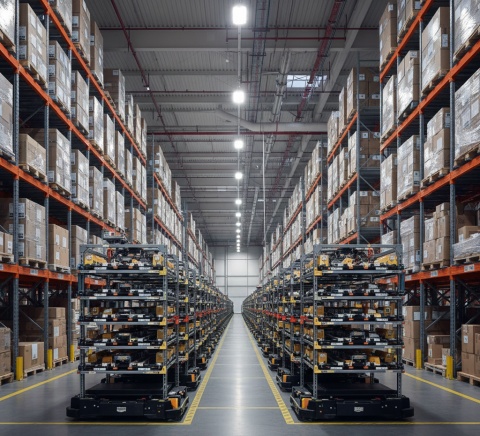
Amazon has fundamentally revolutionized how we shop, making next-day (and sometimes same-day) delivery a standard expectation. Behind this logistical marvel lies a vast, increasingly automated network of distribution centers, where robots play a starring role in getting your packages to your door. Far from a futuristic fantasy, Amazon's robotic workforce is already a critical component of its operations, and its evolution is set to redefine the future of e-commerce and industrial robotics.

↕️ Show/Hide Full Article

The Current State: Kiva's Legacy and Mobile Robots

Amazon's journey into advanced robotics began with its acquisition of Kiva Systems (now Amazon Robotics) in 2012. This move introduced the core technology that underpins Amazon’s modern fulfillment centers:

  • Amazon Robotics Drives (formerly Kiva Robots): These are autonomous mobile robots (AMRs)—low, orange, squat machines—that operate within gated areas of the warehouse. Crucially, they do not move packages; they move the shelving units (or "pods") to the human workers. This shift from "person-to-goods" to "goods-to-person" dramatically cuts down the time human workers spend walking across vast warehouses, boosting efficiency and reducing physical strain.
  • Sorter and Conveyor Systems: Robots are integrated with complex conveyor belts and scanning systems that quickly identify, sort, and route packages. These systems use machine vision to read labels and direct items to the correct outbound lane with minimal human intervention.
  • Robotic Arms: While less common than AMRs, specialized robotic arms are increasingly used for repetitive, high-precision tasks like singulating items (separating stacked items) and palletizing (stacking boxes onto pallets), especially in the shipping area.

The Next Frontier: Dexterity and General-Purpose Intelligence

Amazon’s current fleet excels at mobility and transportation. The next phase of development focuses on the trickier, more nuanced tasks that still require human intelligence and dexterity: picking and manipulation.

  • The Challenge of "The Pick": Picking items off a shelf and placing them into a bin is challenging for robots because inventory is highly varied (different shapes, sizes, weights, and textures). Amazon is investing heavily in advanced AI and machine learning to solve this "Holy Grail" problem of warehouse automation.
  • The Rise of Dexterous Robots (e.g., Sparrow and Cardinal):
    • Sparrow: This robot uses sophisticated computer vision and AI to identify millions of different items and performs the item "pick" before it can be packed. Its success rate and speed are steadily improving.
    • Cardinal: This project focuses on sorting large packages. It uses a robotic arm with a custom vacuum gripper and advanced AI to lift and move packages up to 50 pounds, automating a notoriously difficult and strenuous job.
  • Humanoid Integration (The Agility Partnership): Amazon is also testing humanoid robots, such as Agility Robotics' Digit, for specialized tasks like moving empty totes and consolidating inventory. While not yet a primary worker, this integration shows Amazon’s commitment to exploring highly flexible, general-purpose machines that can operate in human-centric spaces.

The Impact on Labor and the Future of Work

Amazon’s increasing use of robotics has raised concerns about job displacement. However, Amazon argues that automation has not resulted in a net loss of jobs; rather, it has shifted human roles:

  • Job Evolution: Roles are moving from manual labor (walking, lifting, sorting) to highly technical functions (robot maintenance, software management, data analysis, and anomaly correction).
  • Ergonomics and Safety: Robots are taking over the most repetitive, strenuous, and injury-prone tasks, theoretically improving safety and ergonomics for human associates. For example, robots that move shelving units reduce the need for humans to walk miles per day.

Why This Matters to Consumers

Amazon’s investment in robotics is not just about internal cost-cutting; it directly impacts the consumer experience:

  1. Speed: Robots drastically reduce processing time, making rapid delivery feasible and economical.
  2. Accuracy: Automated systems minimize human error in sorting and packaging, meaning fewer incorrect orders.
  3. Cost: As efficiency increases, costs are contained, which helps sustain low prices and competitive shipping fees.

The warehouse of the future will not be empty of humans, but it will be thoroughly orchestrated by machines. Amazon is leading the charge in demonstrating how advanced mobile robotics, integrated with state-of-the-art AI for manipulation, can scale to meet the demands of global e-commerce. Pal Robotics will continue to track how these technologies move from the distribution center floor to other logistics and commercial spaces.